If the first Week 1 question is what True Men Rising means, the second is what keeps a man from rising at all.
Sometimes the answer isn't open rebellion. It's image management.
Many of us have learned how to stay respectable while living a divided life. We know how to say enough without saying what's true. Meanwhile, we keep serving, working, and showing up while something hidden keeps hollowing us out.
So here is the honest question: Are you walking in truth, or are you working hard to protect an image?
If you keep trimming the truth, withdrawing when life gets dark, protecting respect, renaming compromise, delaying responsibility, and feeling exhausted from maintaining appearances, you're probably managing an image instead of walking in truth.
“But if we walk in the light, as he is in the light, we have fellowship with one another, and the blood of Jesus his Son cleanses us from all sin… If we confess our sins, he is faithful and just to forgive us our sins and to cleanse us from all unrighteousness.” — 1 John 1:7, 9
That passage matters because truth and grace are not enemies. Walking in the light is not public spectacle; it's honest life before God and with the right people. It's where we experience rich fellowship and cleansing.
Naming a pattern, not reducing you to it
Before we get into the signs, let's clear something up: this article is not trying to pin a label on you. It's trying to name a pattern. We can be struggling and still be honest. The danger is when we start protecting an image instead of telling the truth. That's where secrecy grows, brotherhood weakens, and real repentance gets delayed.
And secrecy makes all of it worse.
You may be carrying something you've never known how to say out loud. This may produce feelings of shame, confusion, or a divided heart. The answer is not pretending harder. The answer is truth. Truth before God. Truth with a trusted brother. Truth with someone you owe the truth. Truth makes repentance possible and refuses to let shame become our identity.
Sign 1: You tell edited versions of the truth
This is where image management often starts.
You're not always telling outright lies. Sometimes you're trimming. Your wife asks if you're okay, and you say you're "just tired". A friend asks how you're doing, and you say "busy". A brother asks if anything is weighing on you, and you give him the polished summary.
You leave out the part that would change the conversation.
You leave out the click, the message thread, the resentment, the spiral, the secrecy, the fear, the loneliness, the part of your story that would make you feel exposed.
That may sound small, but it's not. The moment we start editing the truth to protect ourselves, we're no longer walking openly. We're managing impressions.
Sign 2: You go quiet when your private world gets messy
A man walking in the light may struggle, but he doesn't disappear.
When protecting an image, you go quiet when things get dark. You stop returning texts or avoid the phone call. You keep conversations surface-level and stay busy enough that nobody can ask a second question.
Sometimes this looks spiritual. “Just a lot going on.”
Sometimes it looks practical. “Work has been crazy.”
Sometimes it looks emotional. “I just need some space.”
Sometimes space is real, but sometimes we use this language to hide. Isolation feels safer in the moment because it delays exposure. It also gives secrecy more room to grow.
Sign 3: You want respect more than being known
Most men want to be respected. That part is normal.
The problem comes when being respected matters more than being known.
You want to be the dependable husband, the involved father, the solid volunteer, the calm guy in the Bible study, the man who seems like he has it together. So you start protecting that version of yourself at all costs.
You don't mind being praised from a distance; you just don't want anyone close enough to see the cracks.
That's a dangerous trade. A respected image can keep us from real repentance if we start loving admiration more than cleansing. We'd rather stay impressive than become honest.
Sign 4: You rename compromise instead of confessing it
Image management pushes us to get creative.
It rarely says, “I'm hiding sin.” Instead, we say “I'm stressed.” “I've had a hard week.” “This isn't really a big deal.” “I just need to get myself together first.” “This is private.” “This isn't who I really am.”
Some of those sentences may contain part of the truth. None of them is truly honest.
When we keep renaming compromise, repentance becomes impossible. We ask grace to comfort us while refusing the truth that would expose us. But grace doesn't excuse compromise; it leads men out of it.
You can't repent of what you keep rewording.
Sign 5: You talk about responsibility more than you practice it
Image management is not only about private sin. It also shows up in neglected duty.
You talk about leadership while avoiding one needed conversation at home for three weeks. You talk about discipline while leaving simple responsibilities undone. You speak the language of integrity while still failing to follow through, apologize clearly, or do the next hard thing in front of you.
At some point, language becomes camouflage.
Responsibility isn't built by saying the right words. It's built in ordinary obedience. Showing up when we said we would. Telling the truth the first time. Owning the tone we brought into the room. Following through on what our family, church, or work actually needs from us.
Sign 6: Pretending is making you tired
A divided life is exhausting.
It takes energy to remember what version of the story you told and keep conversations at the right distance. You strive to look steady in public while living in private fear that the truth might come out.
Some men call this stress. Sometimes it is. But sometimes it's the weight of hiding.
In Psalm 32, David speaks about what hiddenness does to a man:
For when I kept silent, my bones wasted away through my groaning all day long. For day and night your hand was heavy upon me; my strength was dried up as by the heat of summer. — Psalm 32:3-4
Pretending can look controlled for a while, but it won't feel light. Although truth can be costly, pretending is heavier.
What walking in the light actually looks like
Walking in the light doesn't mean broadcasting your story to everybody or turning confession into drama. One conversation won't fix every pattern overnight.
Walking in the light means honesty before God and honesty with the right people. This includes:
- Naming temptation honestly without confusing it with identity.
- Naming behavior honestly without softening it.
- Refusing to let shame become your name.
- Accepting repentance as a real turning, not just a burst of regret.
- Accepting sanctification as a real process, not a promise of instant simplicity.
- Letting brotherhood get close enough to help.
James says to confess your sins to one another and pray for one another. This is one of God’s ordinary ways of bringing healing into a man’s life.
Walking in the light is where freedom starts becoming real.
One honest step today
Don't try to repair your whole life tonight.
Take one honest step.
Tell the full truth to God.
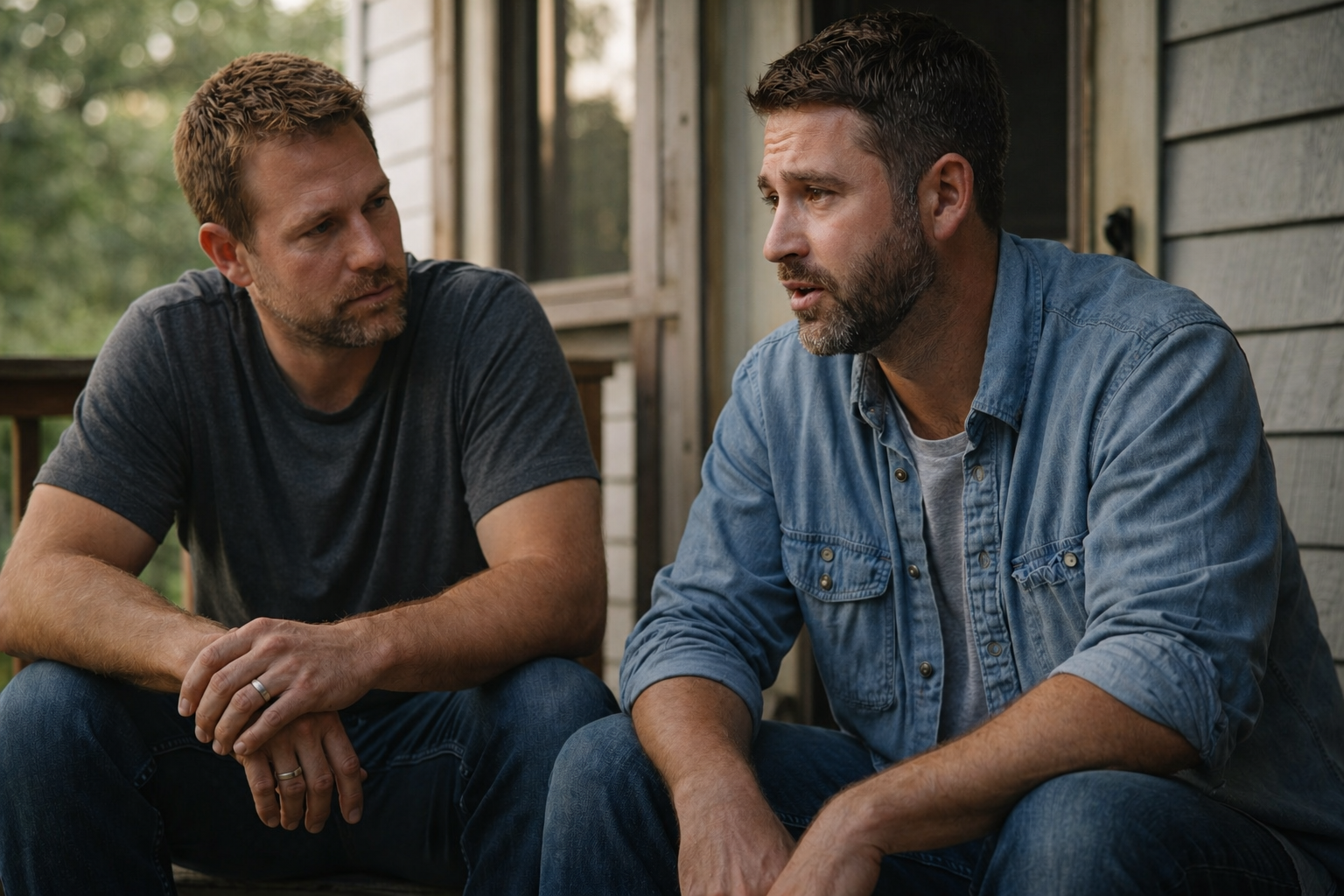
Tell the full truth to one trusted man.
Name one compromise without editing it.
Make one concrete change that matches repentance.
Delete what needs deleting.
Schedule the conversation you've been avoiding.
Confess without softening.
Ask for prayer without protecting your image.
Not because you're building a better performance, but because you're done protecting a false one.
Conclusion
Managing our image we can look steady for a while. But we won't be whole.
Jesus doesn't call us to look clean from a distance. He calls us into the light where confession reveals grace, brotherhood becomes practical and hope stops being vague.
We all have struggles. But our struggles don't define us.
The way forward isn't harsher self-talk. It's truth, repentance, brotherhood, and the cleansing grace of Christ.
Take one honest step. Tell one trusted brother the part of the story you've been editing, and make one practical move that turns confession into obedience today.